
CMMC, GCC High, and Azure Government
Case Studies
From Real Defense Contractors

Every case study in this library covers a real compliance challenge, a real environment, and a real outcome. Defense contractors passing audits, protecting CUI, and keeping contract eligibility through CMMC compliance, GCC High licensing, Azure Government migrations, and Microsoft 365. 

CMMC Now

Browse by Topic.

CMMC Compliance 

Everything defense contractors need to know about CMMC Level 1 and Level 2 certification. Self-attestation requirements, C3PAO assessments, NIST 800-171 controls, and what the November 2026 deadline means for your contracts.

GCC High 

Guides and analysis on Microsoft 365 GCC High licensing, configuration, and compliance. Who needs it, how to get it, and what to build inside it.

Azure Government 

Coverage of Azure Government architecture, migrations, and compliance requirements for defense contractors. Environment design, identity configuration, and what separates authorized from compliant.

FedRAMP 

Practical guidance on FedRAMP authorization pathways, readiness requirements, and continuous monitoring obligations for cloud service providers serving federal agencies.

Microsoft 365 Defense

How Microsoft 365 operate inside regulated environments. Teams, SharePoint, OneDrive, and Purview in GCC High and GCC configurations for DIB contractors.

Licensing 

Microsoft licensing strategy for defense contractors. GCC High vs. GCC, license tier decisions, AOS-G partner requirements, and how to avoid overspending on seats you don’t need.

Migrations 

Step-by-step guidance on moving from commercial Microsoft environments into GCC High, Azure Government, and other regulated platforms without disrupting business continuity. 

Identity & Access Management

Identity configuration, access controls, and Entra ID deployments in regulated environments.

Featured

Practical guidance on CMMC, GCC High, FedRAMP, and Azure Government for defense contractors.

All Posts

About These Engagements.

Agile IT works with defense contractors, aerospace organizations, legal firms, and government entities working through CMMC compliance,
GCC High licensing, Azure Government migrations, FedRAMP authorization, and Microsoft 365 for regulated environments. The case studies
in this library cover real defense contractor cybersecurity engagements across CMMC Level 1 self-attestation, CMMC Level 2 certification,
DFARS 7012 compliance obligations, and federal cloud migrations. Each engagement reflects real compliance decisions, real environments,
and real outcomes. If you’re evaluating a compliance partner, the proof is here.

Our Insight

Blog
Raven Riley

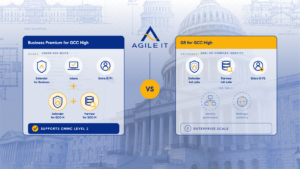
GCC High Licensing and G3 vs. G5 Start With CMMC Scope 

GCC High Licensing and G3 vs. G5 Start With CMMC Scope  Microsoft licensing is the last decision in the chain, and it is the one most organizations make first. The contract, the data, and the Cybersecurity Maturity Model Certification (CMMC) Assessment Scope decide the Microsoft cloud and the licensing tier inside

Read More »
Blog
Raven Riley

What Counts as CUI in Microsoft 365 and Azure Government

Most CUI scope decisions get made in one meeting, by whoever is in the room, and documented afterward to match. That boundary holds until a C3PAO asks who justified it. The designating agency decides what qualifies. Data flow decides what’s in scope. The Microsoft environment follows both, not the reverse.

Read More »
CMMC assessment failures
Blog
Raven Riley

Where CMMC Assessments Break Down in Microsoft Environments

Assessment failures rarely start with missing controls. They start with decisions no one wrote down. CMMC Level 2 assessments that stall inside a Microsoft environment tend to start from the same baseline, not a shortage of controls. Conditional access is enforced, audit logging is active, and identity governance is running

Read More »
CMMC Level 1 vs Level 2
Blog
Maggie McGrath

CMMC Level 1 vs Level 2: What Defense Contractors Need to Know 

CMMC Level 1 and Level 2 don’t follow the same logic, and treating them as steps on the same ladder is where scoping goes wrong. This guide breaks down what triggers each level, how the assessments differ, and the decisions defense contractors need to make before either one gets scheduled.

Read More »

Most Recent News

Blog
Raven Riley

GCC High Licensing and G3 vs. G5 Start With CMMC Scope 

GCC High Licensing and G3 vs. G5 Start With CMMC Scope  Microsoft licensing is the last decision in the chain, and it is the one most organizations make first. The contract, the data, and the Cybersecurity Maturity Model Certification (CMMC) Assessment Scope decide the Microsoft cloud and the licensing tier inside

Read More »
Blog
Raven Riley

What Counts as CUI in Microsoft 365 and Azure Government

Most CUI scope decisions get made in one meeting, by whoever is in the room, and documented afterward to match. That boundary holds until a C3PAO asks who justified it. The designating agency decides what qualifies. Data flow decides what’s in scope. The Microsoft environment follows both, not the reverse.

Read More »
CMMC assessment failures
Blog
Raven Riley

Where CMMC Assessments Break Down in Microsoft Environments

Assessment failures rarely start with missing controls. They start with decisions no one wrote down. CMMC Level 2 assessments that stall inside a Microsoft environment tend to start from the same baseline, not a shortage of controls. Conditional access is enforced, audit logging is active, and identity governance is running

Read More »
CMMC Level 1 vs Level 2
Blog
Maggie McGrath

CMMC Level 1 vs Level 2: What Defense Contractors Need to Know 

CMMC Level 1 and Level 2 don’t follow the same logic, and treating them as steps on the same ladder is where scoping goes wrong. This guide breaks down what triggers each level, how the assessments differ, and the decisions defense contractors need to make before either one gets scheduled.

Read More »

Your Environment Could Be the Next Case

Every engagement above started the same way, a contractor facing an audit, a deadline, or a contract requirement they couldn’t risk missing. If that’s where you are, start with an assessment of your Microsoft environment.